Dreaming of kicking back on a sunny beach while your bank account grows fat sounds amazing. When you throw in Saudi Arabia’s futuristic gigacity, the idea gets even wilder. Can you actually buy property there today, flip it tomorrow, and retire early before robots take over? Let’s find out.
What Is NEOM and Why Is Everyone Talking About It?
NEOM is a massive, multi-billion-dollar construction project located in the northwestern corner of Saudi Arabia. It is a main part of Vision 2030, a grand plan to build a modern, high-tech economy that does not rely only on oil.
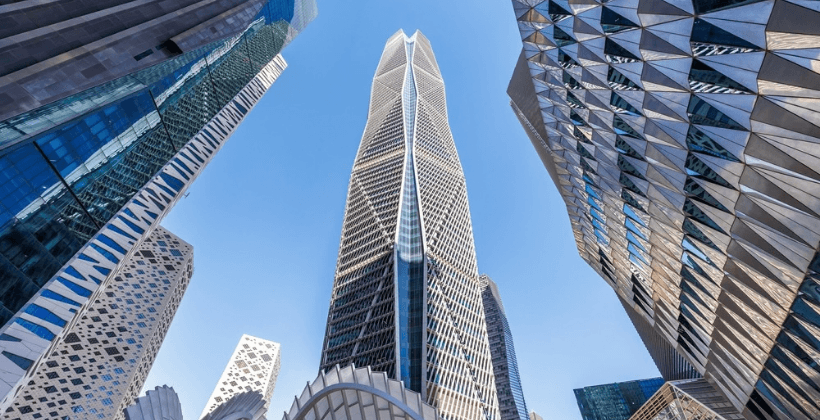
The project includes famous planned zones like The Line (a giant mirrored linear city), Oxagon (a floating industrial hub), and Trojena (a mountain ski resort). People are talking about it because it promises flying cars, zero-carbon living, and advanced artificial intelligence everywhere you look. Investors see these crazy, futuristic blueprints and wonder if getting in early can make them rich overnight.
How Traditional Real Estate Flipping Works
Flipping a house in a normal neighborhood is a well-known game. You look for a property priced 20% below market value, invest around $20,000 to $30,000 in kitchen and bathroom upgrades, and sell it 6 months later for a 15% to 25% net profit. It requires a sharp eye, local market data, and quick liquidity. However, trying to do this in an unbuilt mega-region like NEOM is an entirely different financial ballgame.
The Reality of Buying Off-Plan Property Early
Because neighborhoods are still being cleared and built, early real estate investing here usually means buying "off-plan." You are purchasing property units or land rights based on 3D blueprints 3 to 5 years before construction finishes. While developers might offer lower entry prices, sometimes requiring a 10% to 20% down payment with payment milestones, your money gets completely locked up.
You cannot easily flip it for a quick profit because secondary resale markets for unbuilt desert plots are virtually nonexistent compared to established markets in Riyadh, where property transactions average billions of Riyals quarterly.
Understanding Liquidity and Financial Risk
In finance, liquidity measures how fast you can turn an asset back into cash. Real estate is already an illiquid asset, typically taking 60 to 90 days to sell. When you invest in a mega-development that is years away from operational status, your liquidity drops to zero.
If an emergency pops up and you need to access your cash, you cannot pull it out of a concrete foundation or a digital blueprint. Tying 100% of your net worth into an unliquid asset for early retirement is a high-stakes gamble.
The Robot Factor: Factoring in Future Technology
The big question asks if you can retire before the first robot moves in. NEOM’s digital blueprint relies heavily on AI, autonomous delivery fleets, and smart infrastructure that will cost tens of billions of dollars to deploy.
However, developing fully automated municipal systems takes decades of software testing and engineering trials. If your entire retirement timeline depends on humanoid robots managing your rental properties or regional land values jumping 200% overnight, you are likely looking at a 10-to-15-year timeline, not an overnight flip.
Smarter Ways to Build Wealth in the Kingdom
If you want to build serious wealth in Saudi Arabia without risking your life savings on a high-risk desert land flip, there are safer paths.
Allocating funds into local stock exchanges (like the Tadawul, which features stable dividend-yielding blue-chip companies), mutual funds, or residential real estate in established urban centers like Riyadh and Jeddah can yield reliable annual returns of 6% to 10%. These traditional options protect your cash from construction delays and inflation.
Conclusion
Retiring early sounds amazing, but treating a futuristic gigacity like a quick house-flipping game ignores basic financial realities. Real freedom takes patience, diversification, and math that actually adds up. Protect your cash portfolio, manage your risk ratios, and let the developers build the future at their own pace.