For centuries, the desert night sky has been more than a beautiful sight in Arabia. It was a guide for travellers, a source of stories, and an essential part of understanding the natural world. Long before modern navigation systems, people looked to the stars to understand direction, seasons, and time.
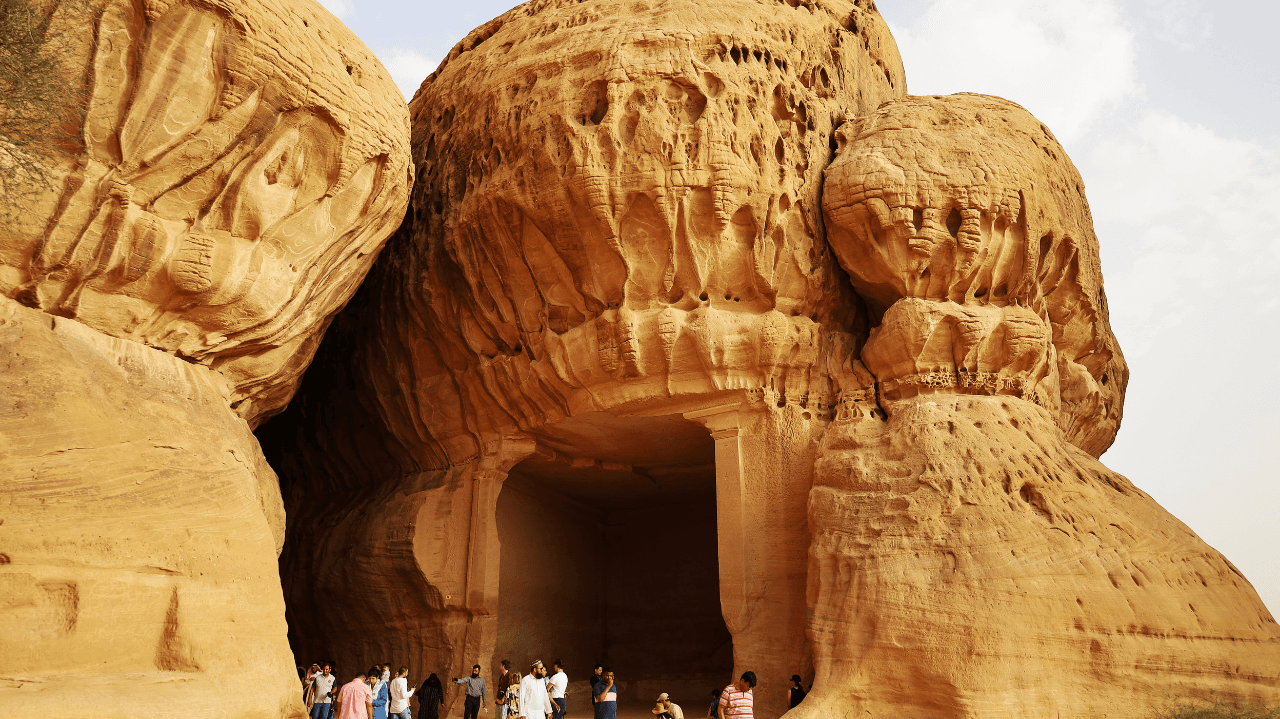
Today, that relationship with the night sky is finding a new expression. Across Saudi Arabia, desert landscapes are becoming destinations for stargazing, astronomy experiences, and night-time tourism. Among the most remarkable examples is AlUla, where ancient landscapes, archaeological heritage, and exceptionally dark skies come together to create a distinctive tourism experience.
When the Desert Becomes an Observatory
One of the biggest attractions of desert stargazing is its simplicity. Away from the bright lights of major cities, the night sky can become dramatically clearer. Saudi Arabia's vast desert areas offer natural conditions that make it possible to experience stars, planets, and the Milky Way with far less interference from urban light pollution.
AlUla has increasingly positioned itself around this natural advantage. In October 2024, AlUla Manara and Gharameel Nature Reserve became the first Dark Sky Park sites in Saudi Arabia and the Gulf region to receive certification from DarkSky International. In December 2025, the Sharaan and Wadi Nakhlah areas also received certification, expanding AlUla's protected night-sky territory to approximately 6,146 square kilometres. Together, the four areas form one of the world's largest connected dark-sky destinations.
This is significant because dark skies are not simply a tourism asset. They are a natural resource that requires protection. As destinations grow, managing artificial light becomes increasingly important if the very conditions attracting visitors are to be preserved.
A New Chapter for Saudi Tourism
The appeal of stargazing fits naturally into Saudi Arabia's wider tourism transformation. The Kingdom has been developing experiences that encourage visitors to explore its landscapes, heritage and culture rather than viewing tourism solely through traditional sightseeing.
AlUla illustrates this approach particularly well. The region combines archaeological sites, dramatic rock formations, an ancient oasis, cultural experiences and outdoor activities. Adding astronomy creates another layer to the visitor experience, allowing people to discover the destination after sunset as well as during the day.
According to UNESCO, AlUla received approximately 286,000 arrivals in 2024, while its long-term tourism ambitions include reaching one million visitors annually by 2030.
The opportunity is therefore broader than simply selling an evening under the stars. Stargazing can support accommodation, guides, transportation, food services, outdoor experiences, educational programmes and local businesses. It demonstrates how a natural asset can become part of a wider tourism ecosystem.
Where Ancient Knowledge Meets Modern Experience
Perhaps the most interesting aspect of Saudi Arabia's emerging stargazing culture is its connection to history.
Arab societies have a long relationship with astronomy. The stars helped desert travellers navigate enormous distances, while observations of celestial patterns contributed to knowledge of seasons and time. In AlUla, this relationship between people and the sky is particularly compelling because the surrounding landscape itself carries thousands of years of human history.
The Royal Commission for AlUla highlights how astronomy became part of Arabian life, with generations using the night sky for navigation and developing stories around constellations.
Modern stargazing experiences can therefore offer more than a view through a telescope. Visitors can learn about constellations, ancient navigation techniques and the role astronomy played in Arabian civilization, creating a bridge between scientific curiosity and cultural heritage.
This combination is increasingly important in modern tourism. Travellers are often looking for experiences that tell a story, rather than simply providing a photograph.
Tourism That Encourages Sustainability
There is also a wider lesson in the development of dark-sky tourism.
Unlike large-scale attractions that require extensive construction, stargazing can make use of an existing natural environment. However, that does not mean it has no environmental responsibilities. Excessive artificial lighting, poorly managed visitor numbers, waste and insensitive development could eventually damage the qualities that make dark-sky destinations attractive.
This makes responsible planning essential.
AlUla's broader development model places considerable emphasis on protecting its natural and cultural heritage while creating sustainable economic opportunities for local communities. UNESCO describes the partnership between UNESCO and the Royal Commission for AlUla as an effort to combine heritage preservation, sustainable livelihoods, tourism and community empowerment.
For businesses and destination managers, this presents an important principle: sustainable tourism is not only about reducing environmental damage. It is also about protecting the core experiences that create long-term economic value.
Looking Beyond the Stars
The growing interest in desert stargazing reflects something larger happening across Saudi Arabia. The Kingdom is discovering that some of its most valuable tourism assets do not need to be manufactured. They already exist in its deserts, mountains, heritage sites and night skies.
The challenge is to develop these assets thoughtfully.
For local communities, this can mean opportunities to participate in guiding, hospitality, cultural interpretation and tourism services. For businesses, it can create demand for new experiences and supporting infrastructure. For visitors, it offers a chance to experience Saudi Arabia through a quieter and more reflective form of travel.
Most importantly, the night sky provides a reminder that tourism does not always need to be loud to be memorable.
Standing beneath a clear desert sky, surrounded by ancient landscapes and thousands of visible stars, connects the past with the present in a remarkably simple way. Saudi Arabia's growing interest in astrotourism shows how natural beauty, cultural heritage and responsible economic development can come together to create experiences that are both commercially valuable and meaningful.
As the Kingdom continues to expand its tourism offering, the stars may prove to be one of its most timeless attractions.